Chapter I
Systems
Complicated things become more understandable when we stop staring only at the point where they failed.

Engineering
Learning to See the System
Engineering was one of my earliest ways of understanding the world.
It taught me that complicated things become more understandable when we stop staring only at the point where they failed.
A system has structure.
- Inputs.
- Outputs.
- Loads.
- Feedback.
- Constraints.
- Dependencies.
- Points of failure.
- Sometimes redundancy.
- Sometimes not nearly enough.
And what appears to be malfunction in one component may actually be a perfectly predictable response to conditions somewhere else in the system.
That way of thinking stayed with me. It still shapes the questions I ask:
Where is the load actually being carried?
What changed immediately before the problem appeared?
What is compensating for something else?
Where is the bottleneck?
What feedback loop keeps repeating?
Is the obvious failure really the failure point?
These are engineering questions. They are also remarkably useful human questions.
Three questions
i.
What’s working?
Easy to overlook, because it makes no noise. Whatever is still carrying load deserves to be named before anything is changed.
ii.
What’s not working?
Easy to find. It announces itself. It is usually the symptom rather than the failure, and it draws all the attention in the room.
iii.
What’s missing?
The hardest of the three. Absence leaves no evidence. Nothing points at it. You can only find it by knowing what the system would need in order to hold.
The first two questions can be answered by looking. The third can only be answered by imagining — a missing support, a missing feedback loop, a missing conversation, a missing person, a missing permission.
Most failures are not caused by what is there. They are caused by what was never put there.
An opening is only visible because of the wall around it. Absence has to be read the same way — by the shape of what surrounds it.

The hardest thing to discover is what’s missing.
Biomedical Work
Systems Within Systems
Biomedical work complicated the engineering picture in exactly the right way.
Machines can be complicated. People are something else entirely.
The human body is not a collection of independent mechanisms. It is a living interaction of systems inside systems, each responding to the others.
A change in one place can produce an effect somewhere unexpectedly distant.
A symptom may indicate a problem. It may also represent the body’s attempt to solve one.
Measurement matters.
Context matters.
Timing matters.
And reductionism has limits.
Never confuse a useful description of one part with an understanding of the whole.
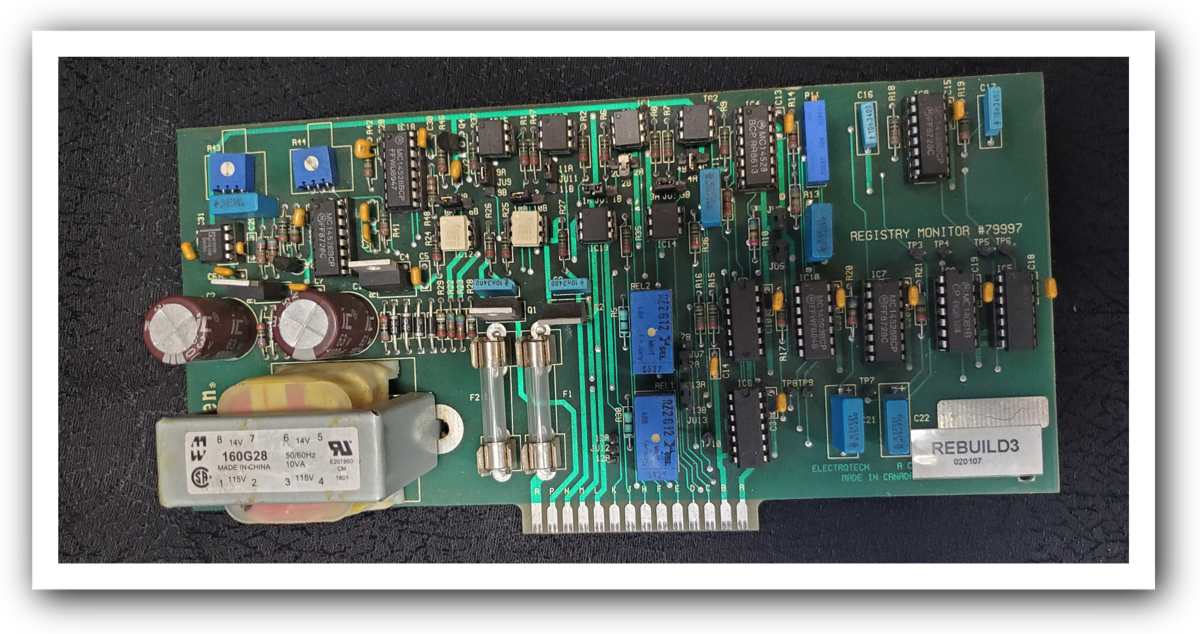
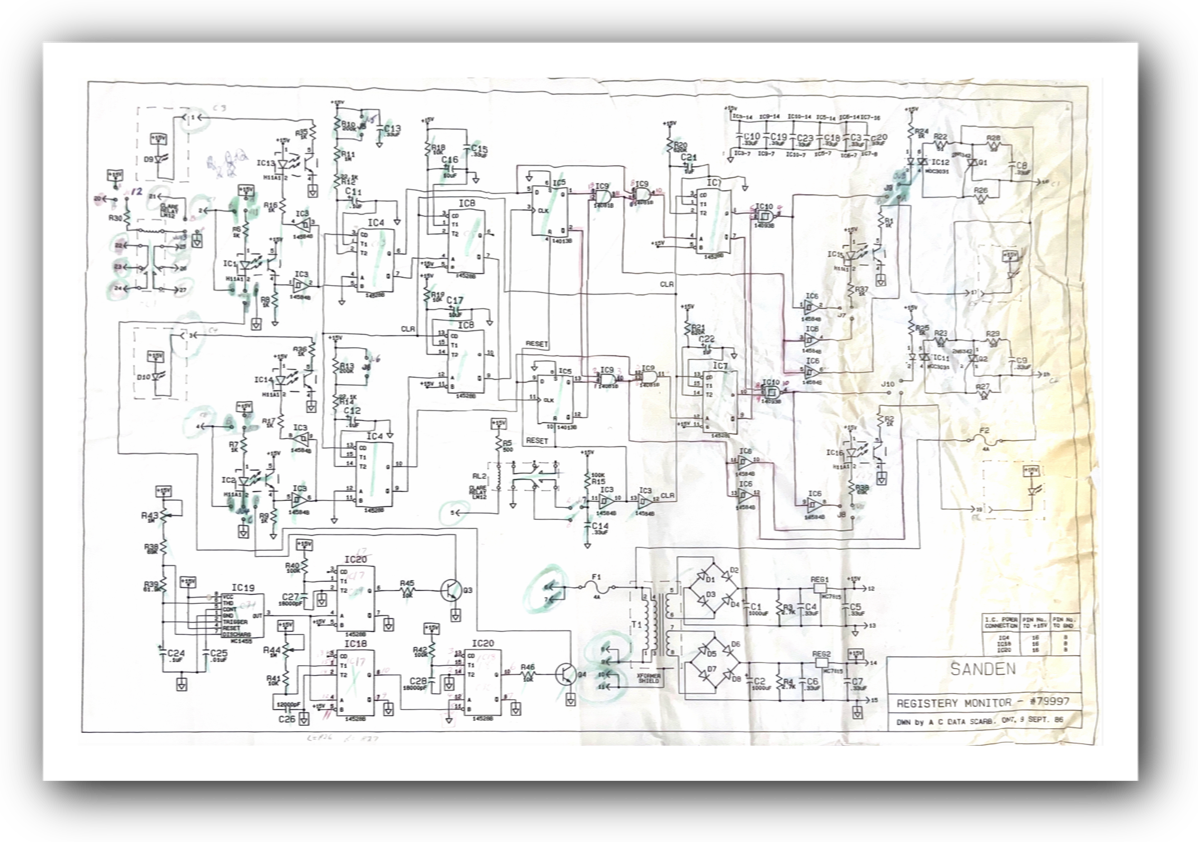
A board and its drawing are not the same thing. One is what got built; the other is what someone intended, marked up later by whoever had to keep it alive.
That principle travels easily from biomedical systems into families, addiction, organizations, relationships, leadership, and spiritual life.
Human beings rarely have only one thing happening.
Network Engineering
The Problem May Not Be Where the Error Message Appears
Computer networks added another layer.
A user sees something fail on a screen. The natural assumption is: the problem is here.
Sometimes it is.
Sometimes the visible failure is simply the place where a problem somewhere else finally became observable.
Networks taught me to trace pathways. Look at connections. Check assumptions.
Understand protocols. Find bottlenecks. Notice where information is getting lost, distorted, delayed, or misunderstood.
Human communication can look remarkably similar.
One person says something relatively simple.
The message travels through ten years of history, fear, expectation, memory, shame, family experience, and previous injury before arriving at the other person.
The sentence transmitted may not be the sentence received.
That does not make either person foolish. It makes the network worth examining.
A good deal of relational work begins when we become curious about what happened between transmission and reception.


Entrepreneurship
Building Without the Whole Map
Entrepreneurship taught me a different form of intelligence.
Engineering can give the comforting impression that sufficient analysis will eventually eliminate uncertainty. Entrepreneurship cures you of that.
There is rarely enough information.
At some point you build.
You try.
You put an idea into contact with reality.
And reality responds.
Sometimes enthusiastically.
Sometimes rudely.
- You learn.
- Adapt.
- Rebuild.
- Abandon something you were certain would work.
- Discover value in something you almost discarded.

Failure is data.
Failure certainly has consequences. It can hurt. It can cost money. It can embarrass us. It can expose our limitations.
But once the embarrassment settles down, failure frequently knows something we need to know.
The question becomes less:
How could I have failed?
and more:
What did this teach us that success could not have taught us?
That is as useful in a marriage as it is in a business.
Innovation & Development
Most New Things Are Old Things Recombined
Development is what happens after the idea stops being interesting.
Innovation is often described as invention. In my experience it is much more often recombination — a method from one discipline carried into another where nobody thought to look for it.
A biomedical instinct in a pastoral conversation. A network diagnostic in a marriage. A theological question inside a product decision.
Development is the unglamorous half. An idea is cheap. Bringing it far enough into reality that someone else can use it is the actual work.
Prototype before you argue about it.
Make the smallest version that can fail honestly.
Let reality edit the concept.
Keep the part that surprised you.
Ship it to someone who owes you nothing.
The same sequence works for a circuit board, a company, a book, a curriculum, or a recovery program.
Innovation is noticing what is missing. Development is being willing to build it.
Technology & What Comes Next
Tools Are Most Interesting When They Return Us to Being Human
My interest in technology never disappeared.
New technologies continue to fascinate me, particularly when they change how humans communicate, learn, remember, create, and organize knowledge.
Artificial intelligence is part of that continuing story.
I am less interested in technology merely because it is new than in the questions it creates:
What becomes possible now?
What becomes easier?
What becomes dangerous?
What human capacities become more important rather than less?
- Can technology help someone organize decades of knowledge?
- See patterns?
- Recover forgotten material?
- Develop a book?
- Think more clearly?
- Prepare for a difficult conversation?
- Create something they previously lacked the tools to create?
The technology is not the most interesting part. The person using it is.